d/Deaf & Disabled AAPI Experiences in King County, WA
Length: 6 months
Team: Jessie, Ashley, Zahra, Fotima, Lizzy
Role: Lead Researcher, Project Manager
Tools: Google Docs, Google Sheets, SurveyMonkey, Zoom
Motivated by my strong desire to grow my research skills and serve the intersection of d/Deaf, disabled, and Asian American, South Asian, and Pacific Islander communities, I proposed a research project to my manager at API Chaya. My manager provided substantial feedback and approved the final iteration with a budget, demonstrating that I have experience with getting buy-in.
From August 2023 to January 2024, I initiated and led a Community-Based Participatory Research (CBPR) project to understand the lived experiences of d/Deaf and Disabled Asian Americans, South Asians, and Pacific Islanders (hereafter referred to as AAPI) in King County, WA. The research question was:
How do d/Deaf and/or disabled AAPI identities influence an individual's experience in King County, WA?
For 6 months, the small research team of 4 neurodivergent and invisibly disabled AAPI researchers and I:
developed the project plan,
deployed a survey with conditional logic,
conducted semi-structured interviews,
analyzed data,
and drafted a research paper on our findings.
We shared our research process, actionable insights, and community-based recommendations in the final presentation at the API-GBV Summit in San Francisco in August 2024. More than 20 advocates, interpreters, community leaders, community organizers, educators, and other professionals attended the workshop. We aimed to uncover and address local resource disparities for d/Deaf and Disabled AAPIs in King County, WA.
How did we get to our findings?
As it was my first time leading a team in a professional environment, I needed to recruit representatives from communities. I sent out a call for volunteers who self-identify as d/Deaf and/or disabled and are part of the Asian American, South Asian, and/or Pacific Islander community. Before the first meeting, I met with each prospective volunteer to ensure fit and interest.
Every Monday evening, I kicked off each Zoom meeting with an icebreaker question, a recap of previous discussion, and a shared agenda outlining decisions to be made and action items for the next meeting. I oriented the team to the principles of Disability Justice and the framework of the Community-Based Participatory Research [presentation]. I gave everyone a piece of homework: find a blog post, an article, a movie, a TV show, a book, or other form of media that resonated with them as a disabled AAPI individual. It was important for us to feel grounded in our chosen topic.
Preliminary literature review
We conducted a preliminary literature review across library databases and journal archives. We discovered that there is little to no existing literature on the intersections of d/Deaf and/or disabled AAPI experiences, let alone in King County, WA. Most of the tangentially relevant literature focused on the mental health and physical health of disabled AAPI individuals. Strangely, this absence validated the premise of our research project.
Comprehensive survey
As we developed our project plan, we created a survey. We chose this survey format because we wanted to reach as many people as possible and learn as much as we could about the experiences of d/Deaf and disabled AAPI community members in King County, WA.
Conditional logic became critical to reliable and accurate data. Because people are more likely to lie on a survey if an incentive is provided, we filtered out the bad actors by asking the questions:
Are you d/Deaf and/or disabled? (Yes/No) [required]
Are you of AANHPI descent? (Yes/No) [required]
We collected 131 survey responses, after removing duplicates and cleaning the data to prioritize authentic responses.
Interviews
We conducted pilot interviews with ourselves and some staff who work at API Chaya. We conducted semi-structured interviews with five (5) community members who self-identified as d/Deaf or Disabled, and AANHPI. We asked the following questions:
If you have accessed these resources from King County or nonprofits, do you feel any of these resources were culturally competent? Culturally competent means being aware of your own cultural beliefs and values and how these may be different from other cultures.
What other resources do you wish existed for you?
What is your connection with King County? (e.g., live, work, worship, study, socialize)
How does your culture impact your experience as an Asian American / Pacific Islander who is d/Deaf or disabled?
How does your identity influence your experience in King County?
What resources do you currently use that have helped you?
What did we learn?
Survey insights
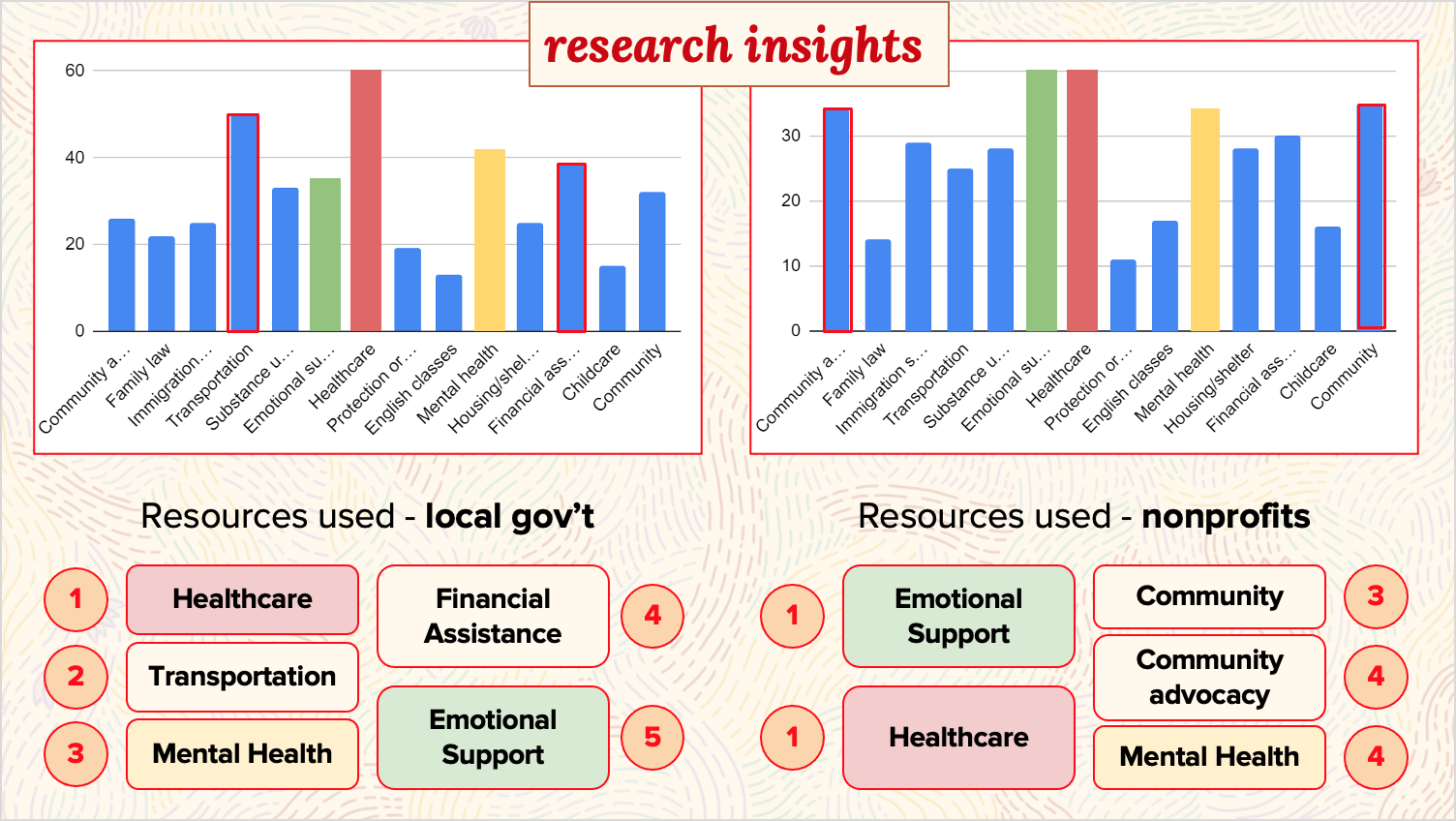
Based on the survey responses, we uncovered deeply felt needs for local government and nonprofit resources related to:
Healthcare
Emotional support
Mental health
Participants also relied on the local government for transportation and financial assistance. They relied on nonprofits for community and community advocacy.
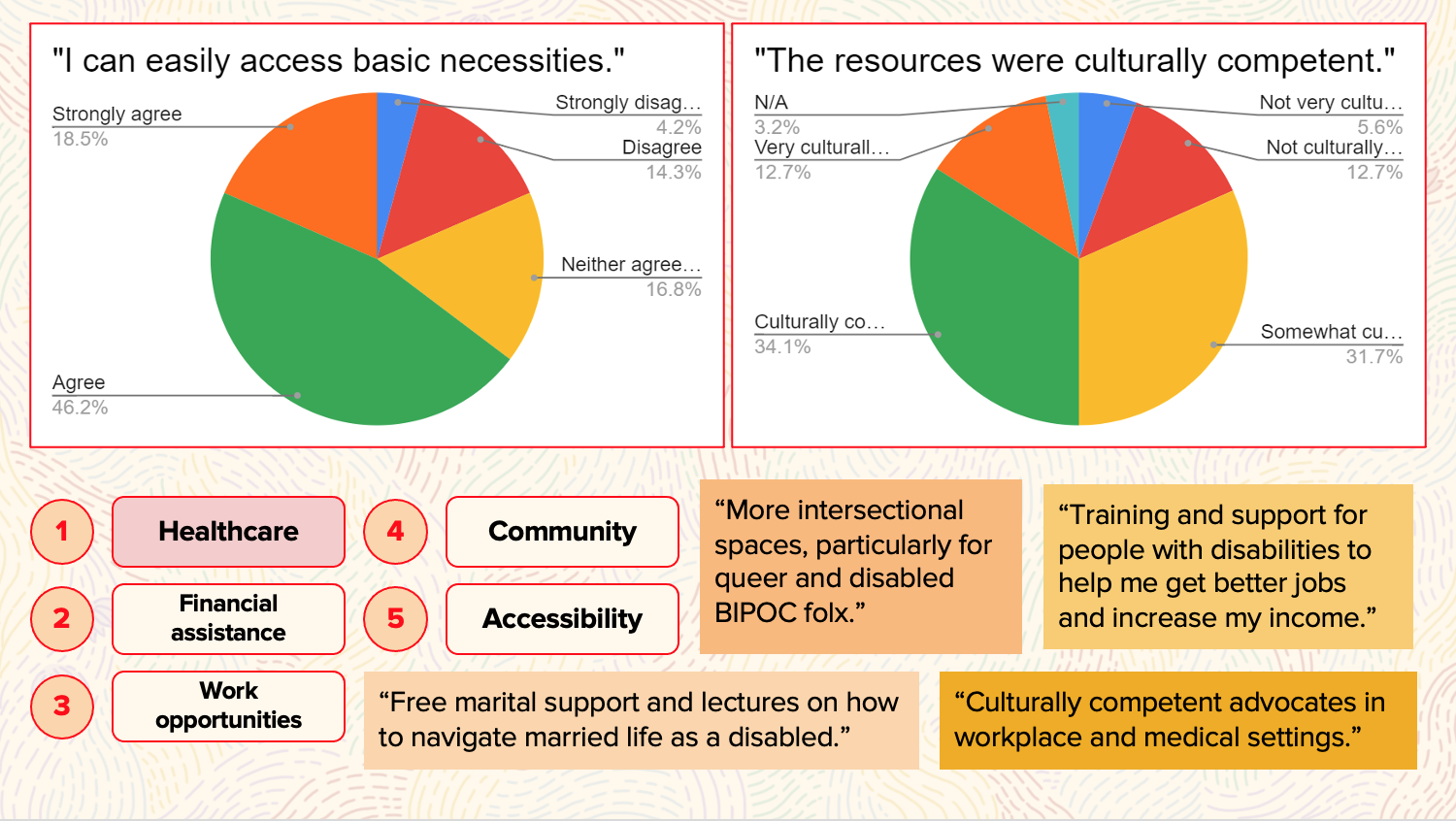
A majority of survey respondents agreed they can easily access basic necessities (18.5% strongly agree, 46.2% agree). Results were mixed on their evaluation of the cultural competency of resources (12.7% very culturally competent, 34.1% culturally competent). Some respondents shared their ideas for resources that would be helpful:
“More intersectional spaces, partiuclarly for queer and disabled BIPOC folx.”
“Free marital support and lectures on how to navigate married life as a disabled [person].”
Interview insights
Participants sought these mental health and emotional support to cope with nontrivial ableism and racism from their families, schools, and workplaces. They desired inclusive intersectional spaces that acknowledged their cultures and backgrounds, so they could receive the emotional and mental support they needed. They needed more:
Financial assistance
Work opportunities
Community
Accessibility
For instance, one participant noted:
“Doctors told me that they didn’t know what [my autoimmune disease] looked like on my brown skin. They know what it looks like on white skin. I didn’t get as much support as I thought I would because I’m brown.”
Out of respect for their privacy, I’ve omitted the exact name of their disease. It is a common disease.
A few interview participants noted that they felt comfortable in King County, WA in comparison to other places they’ve lived in the past. They appreciated the diversity of people and thoughts, and they felt safe to express themselves. When one participant relocated to a majority white area, she felt deep discomfort with the racism she encountered to the extent that she saw a therapist and adopted a dog as an emotional support animal.
Implications
The research findings validated the deeply felt need for greater education of intersectionality, ableism, and racism in society, from schools to hospitals to offices.
Schools, organizations, and communities must strive to dismantle ableism, actively choose anti-racism, and promote a culture of belonging so that everyone can thrive. All participants wanted to improve their quality of life.
As a team, we recommend:
Safe, brave peer-to-peer spaces for authentic dialogue and mental & emotional support to navigate both racism and ableism. These spaces should be closed groups.
Webinars, classes, and workshops to address specific issues that d/Deaf, Disabled, and AANHPI communities face: systemic advocacy, economic empowerment, career coaching, and so on.
Relationship skills classes for families, parents, and children to build loving, healthy relationships that honor the realities of being d/Deaf, disabled, and AANHPI, while promoting a sense of community through sharing resources, supporting each other emotionally & mentally, and building skills grounded in shared immigration history and storytelling.
Community-based organizations and nonprofits should build these into their work plans and theory of change models, noting that community takes true investment and presence. The combination of racism and ableism for d/Deaf and disabled AANHPI folks is a wicked problem. We don’t expect a clean clear-cut solution — all we can do is to chip away at the problem. At the end of this page, I’m sharing how I implemented these research findings in my work at API Chaya as the Disability Justice Community Organizer + Program Coordinator.
What did I learn?
I grew so much professionally from this experience!
As someone who’s recently been diagnosed with ADHD, I have a challenge with commitment and time management. This project forced me to commit to meeting every Monday evening and tracking project progress to meet our internal deadlines and complete meaningful deliverables.
Furthermore, I built 1:1 and group relationships with the team and addressed their inquiries. I leveraged my background in UX research from the Master of Science in Human Centered Design & Engineering program to execute this project.
I developed essential leadership skills and trust in my capability as a lead researcher. This project catalyzed my growth in team leadership.
How did I implement these research findings?
In my role as the Disability Justice Community Organizer + Program Coordinator at API Chaya, a survivor-centered organization, I chose to address a resource disparity: an intersectional space for d/Deaf and disabled Asian Americans, South Asians, and Pacific Islanders to share skills, stories, and experiences. It is not feasible for me to address all areas of improvement, so I wanted to focus on my existing strengths as a community organizer.
While API Chaya’s Disability Justice Pod serves d/Deaf and disabled community members through regular virtual gatherings, we needed a culturally specific space that honored AAPI identities and experiences. In the past, I’d co-facilitated the Deaf Survivors of Color Circle, a peer support group for d/Deaf, Hard of Hearing, and CODA BIPOC survivors of gender-based violence, with a Deaf AAPI survivor. Many people attended from their homes in Washington, California, and Canada.

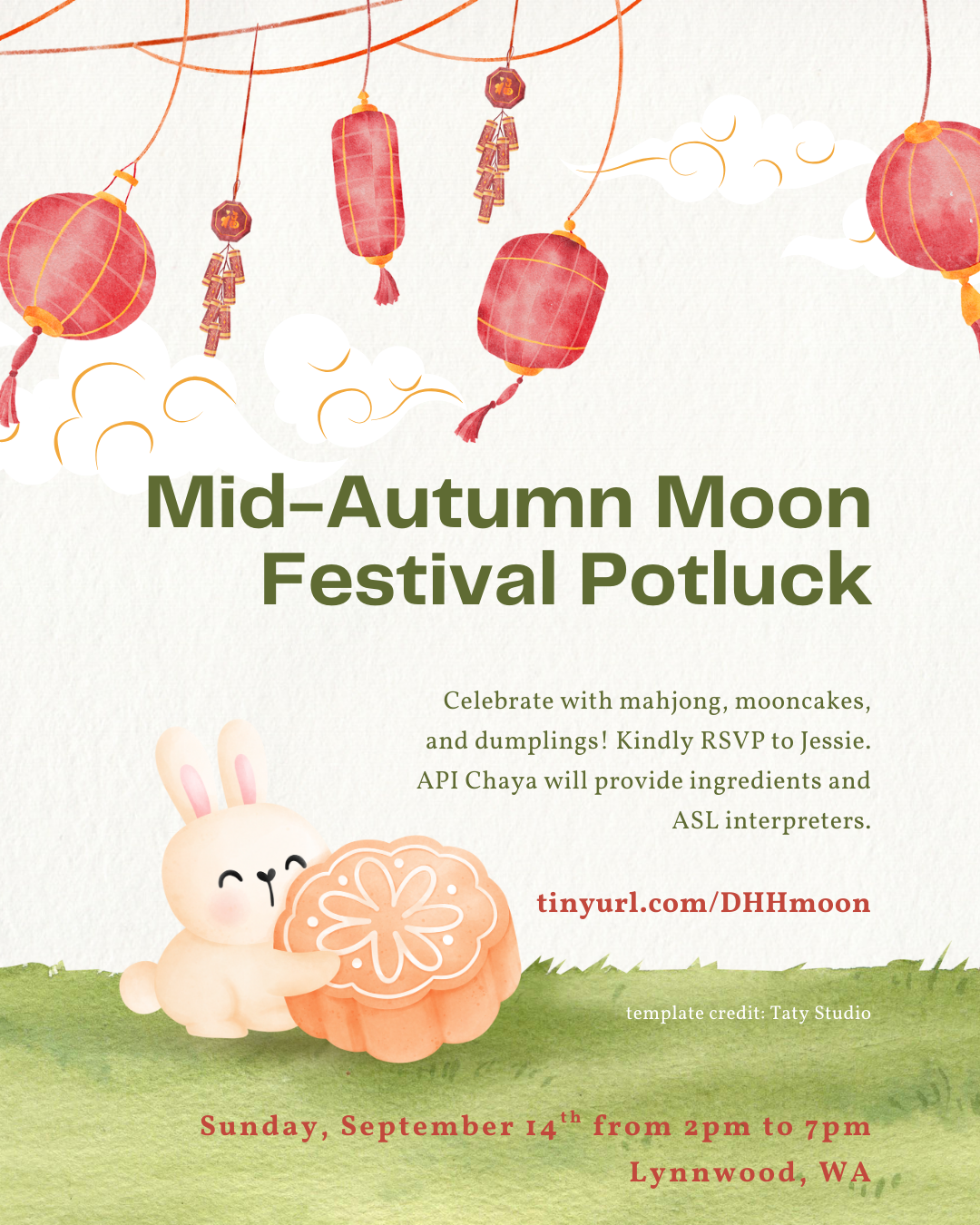
Thus, I made a crucial decision to uplift the Deaf AAPI community through my personal relationships with key community leaders and my professional relationships with Hearing, Speech & Deaf Center and ADWAS (Abused Deaf Women’s Advocacy Services). Beginning 2025, I incorporated intergenerational dialogues in my work plan:
AANHPI Heritage Month Kickoff (8 people attended)
Summer Picnic (7 people attended)
Mid-Autumn Moon Festival Potluck (30 people attended)
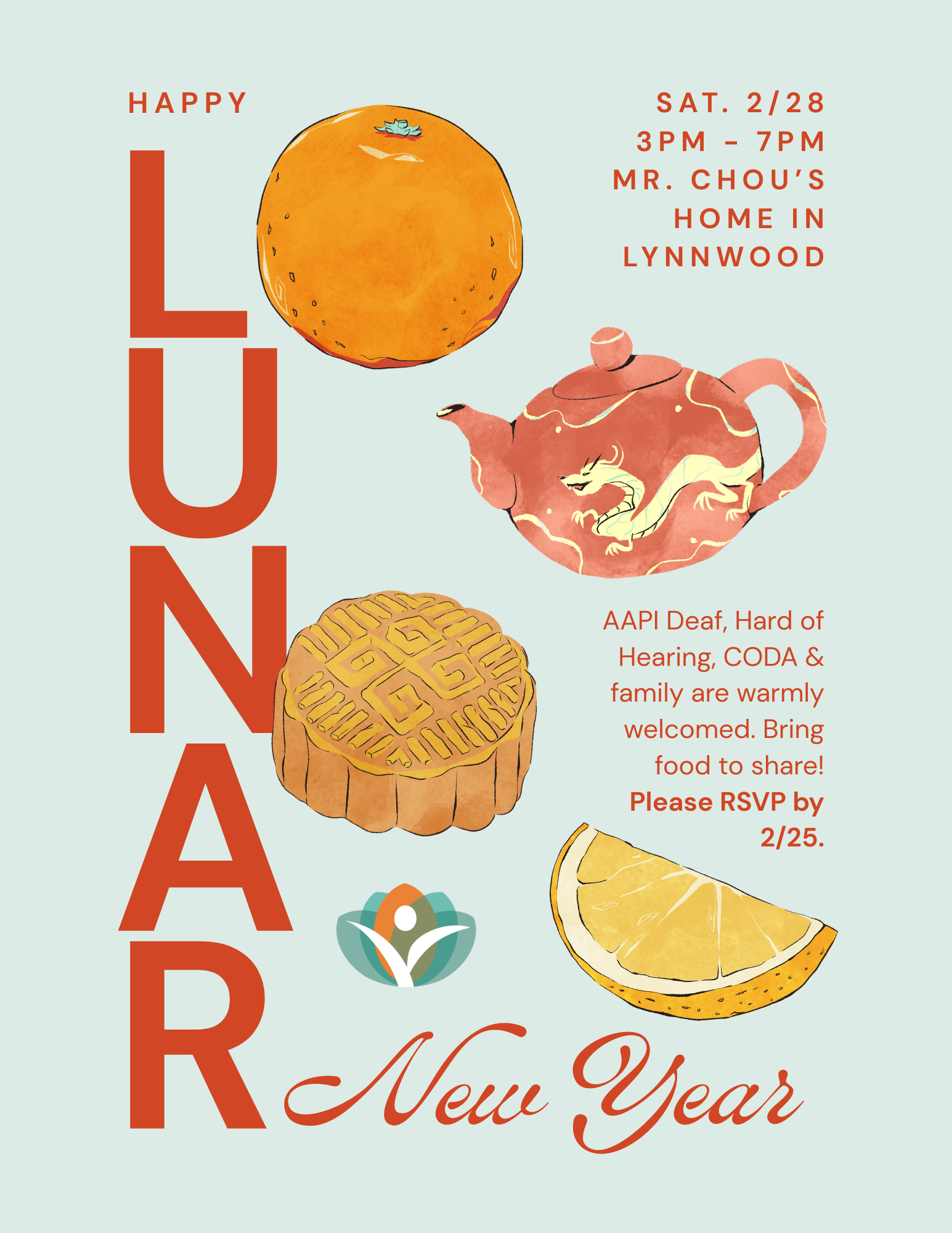
Lunar New Year Celebration (30 people attended)
I understood that many deaf, hard of hearing, and children of Deaf adults (CODAs) are part of the Deaf community. Some of them are not necessarily fluent in ASL, so I chose to hire trusted freelance ASL interpreters who self-identified as BIPOC and/or AAPI to interpret at these intergenerational dialogues. I was able to hire these thanks to API Chaya’s generous approval of using their budget to meet these access needs.
In the future, I would like to create more opportunities to grow the Deaf AAPI community through:
candid conversations about Dinner Table Syndrome and ways to address DTS in an effort to include d/Deaf and hard of hearing family members and loved ones
facilitated trauma-informed dialogues on mental and emotional wellbeing, so that we don’t have to talk about these issues alone
creative spaces for people to reflect on their personal or their families’ immigration journeys through open mics, poetry, zine-making, or some form of creative expression
cultural gameplay where they can learn about their heritage (e.g., Korean yut, Japanese daruma otoshi, Chinese mahjong)
There are so many possibilities!
Currently, I am planning a Filipino cooking class with ADWAS.