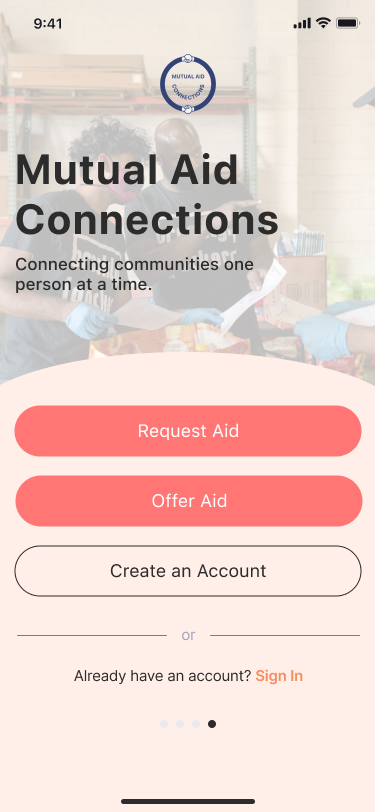
Mutual Aid Connections
Connecting communities one person at a time
Length: 10 weeks
Team: Marie Baeta, Jay Cunningham, Ana Rodriguez, Chris Sim, Jessie Zhang
Role: Researcher, Writer
Tools: Google Docs, Google Sheets, Typeform, Miro
Context
The COVID-19 pandemic has dealt a devastating blow on the survival of everyday people, especially those already experiencing systemic racism and oppression. As the result of the pandemic and the reawakening of the Black Lives Matter movement with the murder of George Floyd, people are giving more to mutual aid organizations and individuals, particularly for Black, Indigenous, and people of color whose struggle for survival is compounded by systemic racism.
What is mutual aid?
Mutual aid is a grassroots and decentralized way for individuals with spare resources to give money, goods, or services to others. It is a way to recognize inequity and (re)distribute wealth amongst diverse community members.
What’s the problem?
In spite of their increased desire to give, many people find it difficult to discover and decide on an organization or individual to fund. Our mobile app aims to provide a straightforward and simple way for people to request aid and locate and fulfill local needs.
Initial User Research
To scope the problem and identify the pain points, we conducted remote user research, employing competitive analysis, surveys, and semi-structured interviews. We wanted to explore our initial question:
How might we create a platform to best serve community members who want to participate in mutual aid, either by requesting or giving aid?Competitive Analysis
We analyzed 5 platforms, focusing on how they organized, validated, and provided information about their mutual aid requests, as well as whether they worked with existing mutual aid organizations or focused on informal peer-to-peer giving.
Based on the competitive analysis, we discovered that there are 2 types of platforms:
Peer-to-peer platforms that redistribute wealth directly between peers
Aggregation platforms that aggregate existing mutual aid resources from other organizations
These platforms mainly supported people affected by natural disasters, COVID-19, economic disparity, and lack of Personal Protective Equipment (PPE). Nearly all of them were organized by community volunteers or non-profits, and they varied widely in their validation methods for aid requests. There’s no clear consensus on the best form of validation, as most systems err on less validation.
Surveys
For our survey, we wanted to find out more about people’s knowledge base, level of engagement, and attitudes toward mutual aid, as well as strengths and weaknesses of mutual aid. We disseminated the survey via convenience sampling on Facebook, Slack, and Instagram, and received 34 responses.
People received information about mutual aid through word of mouth (75%) and social media (72%). They identified their biggest barrier with mutual aid as the massive amount of information to sift through, and they were concerned about whether mutual aid requests from individuals and organizations were legitimate. While they found it easier to discover large mutual aid organizations, they couldn’t find smaller, local organizations as easily. Nevertheless, people loved the idea of helping others and making connections, calling mutual aid quick and low-friction.
Interviews
We conducted 3 interviews with 3 participants via Zoom. I took notes for all of these interviews that dived deeply into personal experiences to gain qualitative insight.
While people define mutual aid nebulously, they generally agreed that mutual aid is a response to a stressor (e.g., losing income, losing housing). They agreed that mutual aid is about developing a stronger sense of community. All 3 participants said they’re more likely to engage in mutual aid with communities closer to them. They named mutual aid as a joyful, reciprocal experience of giving without expecting something in return. For financial requests, they wanted a way to more easily and confidently verify mutual aid requests, especially if they’re coming from outside of their immediate networks. They expressed a need for more hyper-local mutual aid networks, such as their immediate neighborhoods. One participant expressed shame in requesting aid from community members, choosing not to disclose their needs to their family members and friends.
Personas
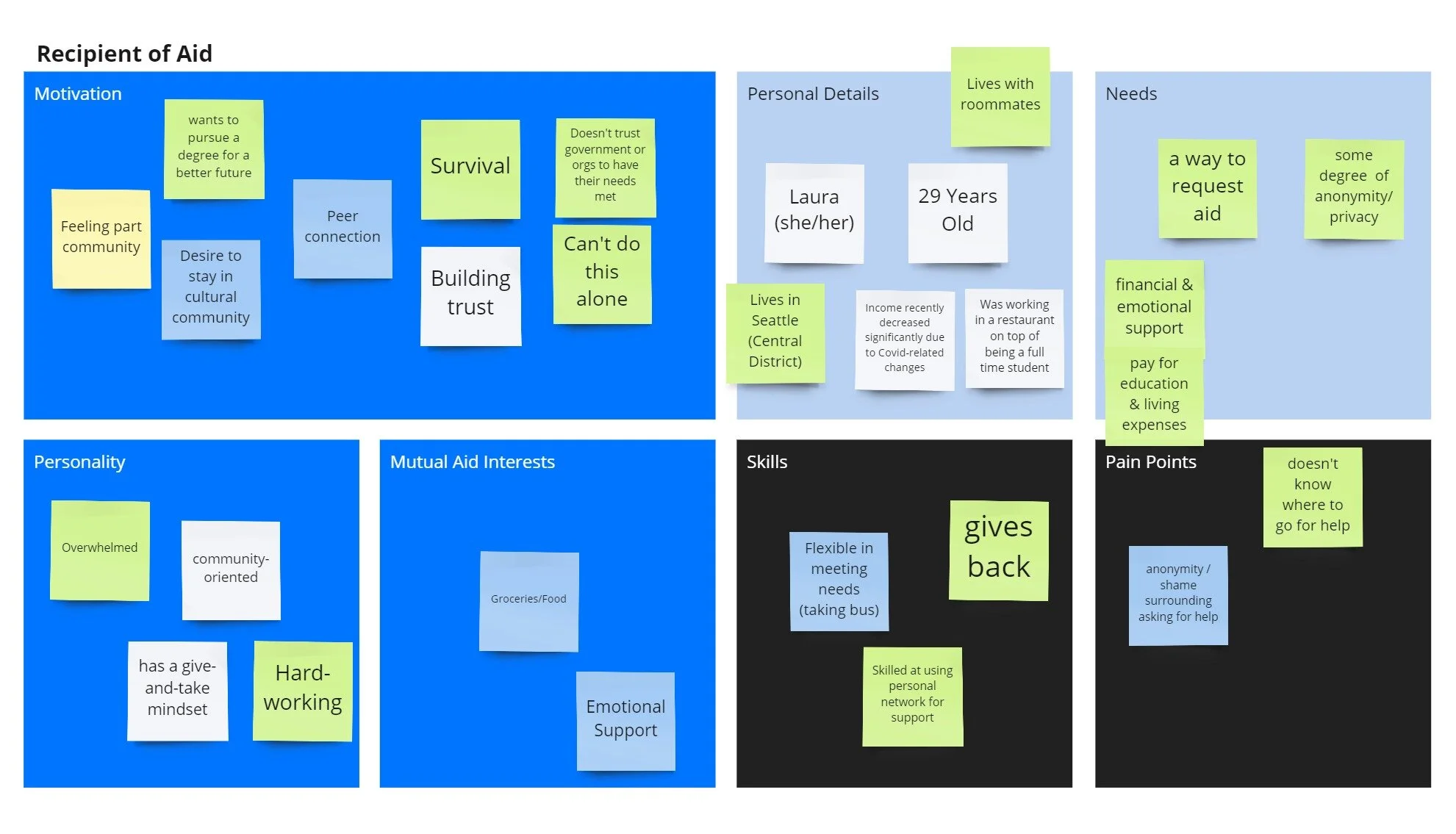
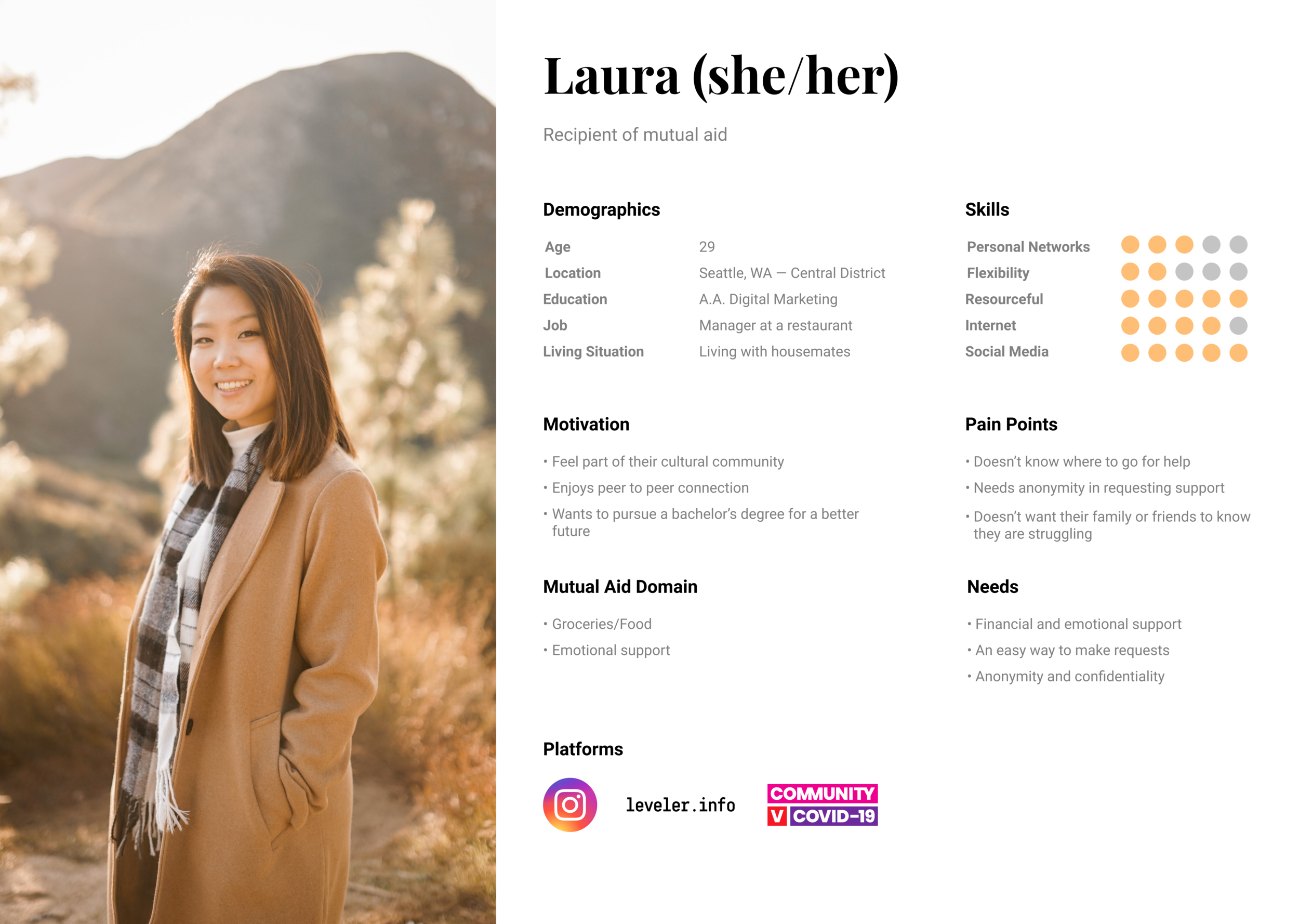
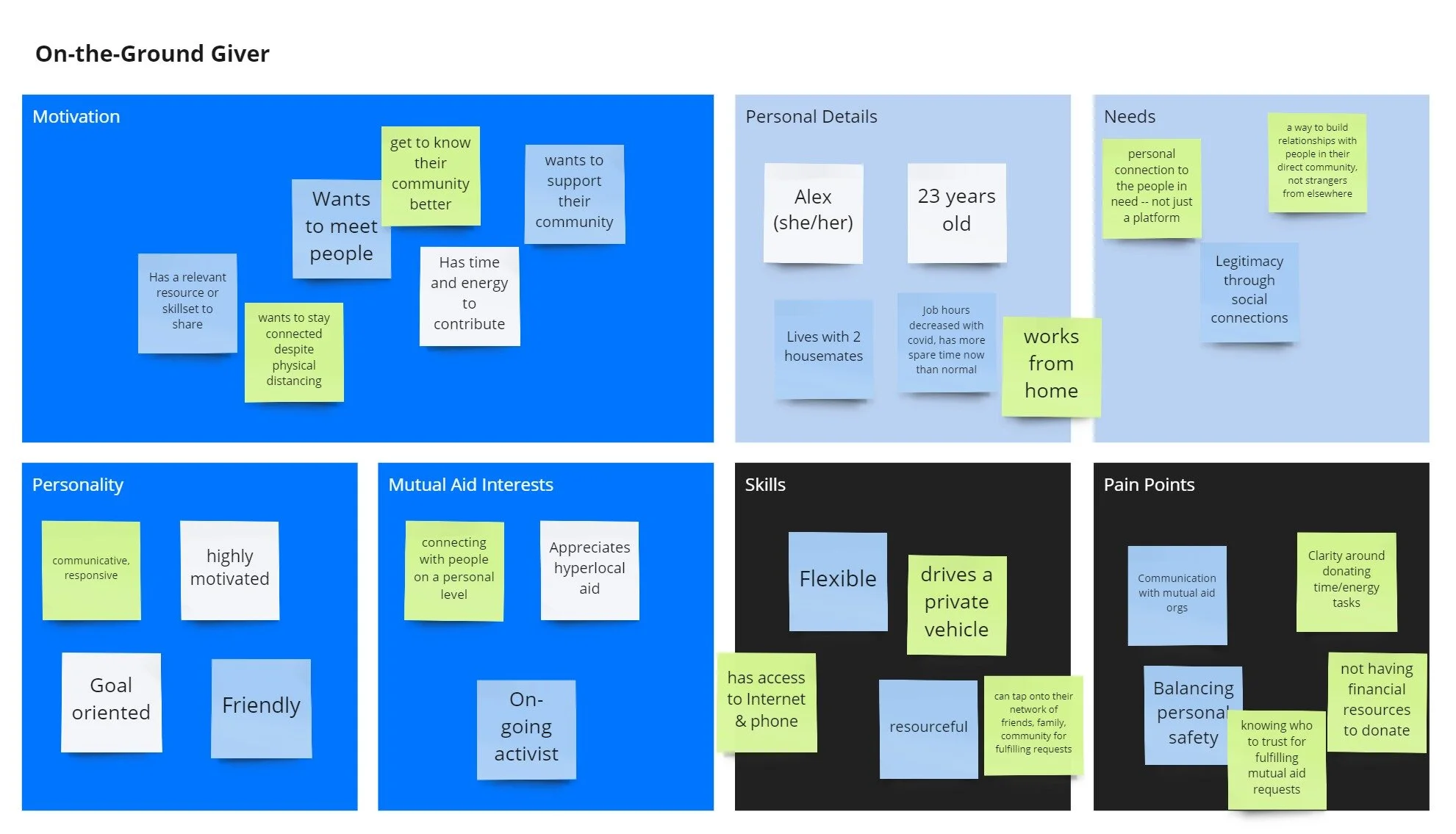
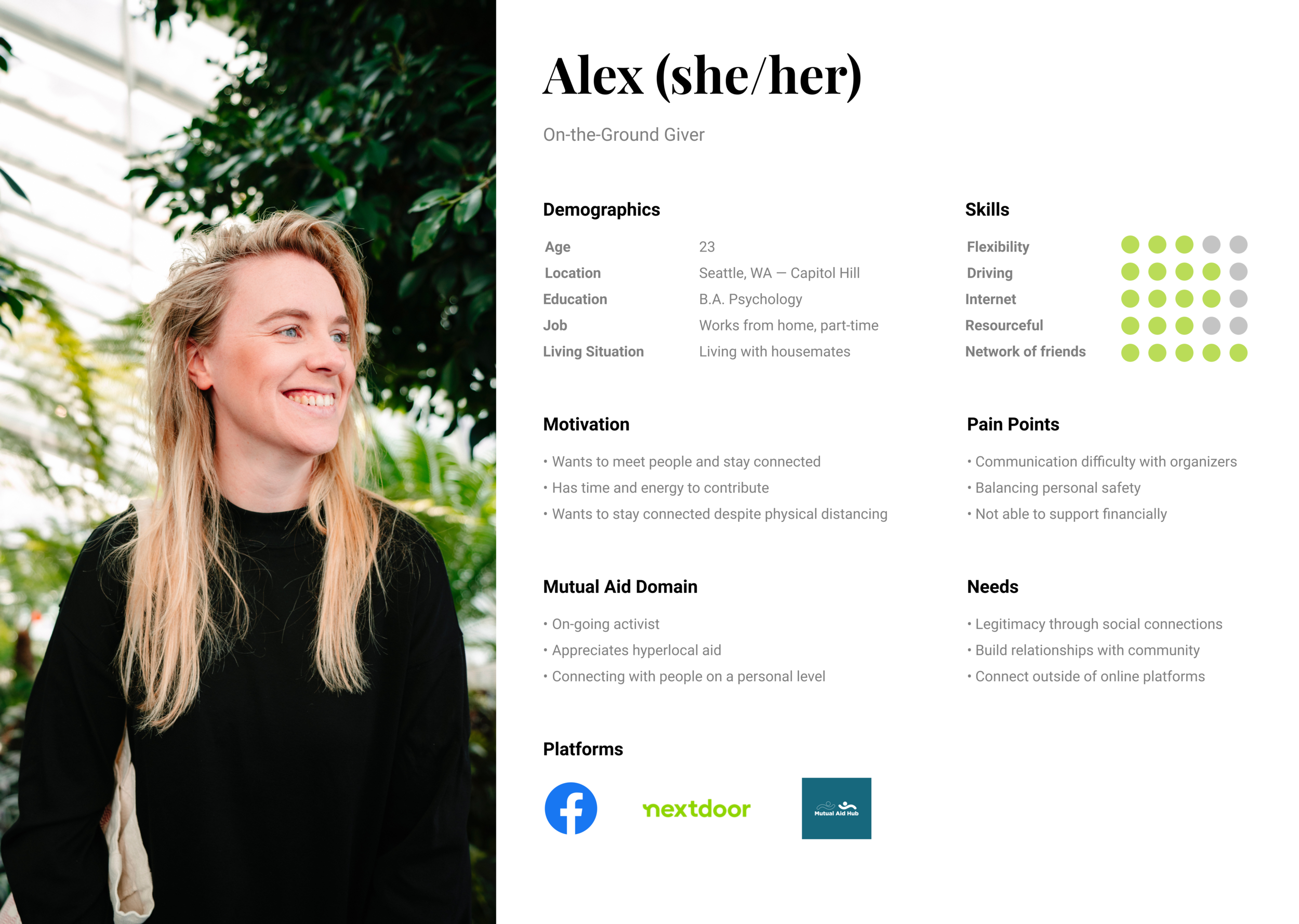
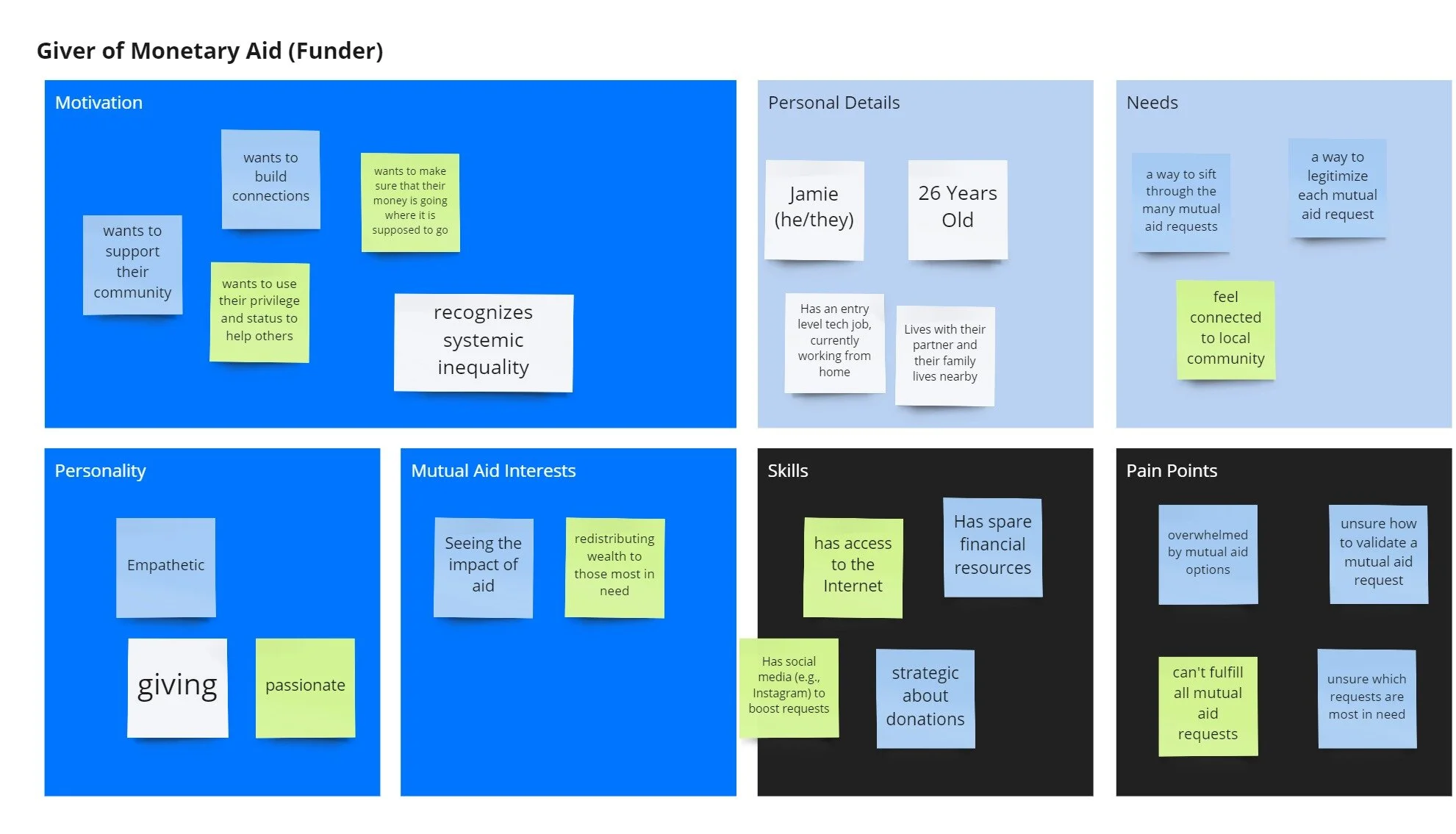
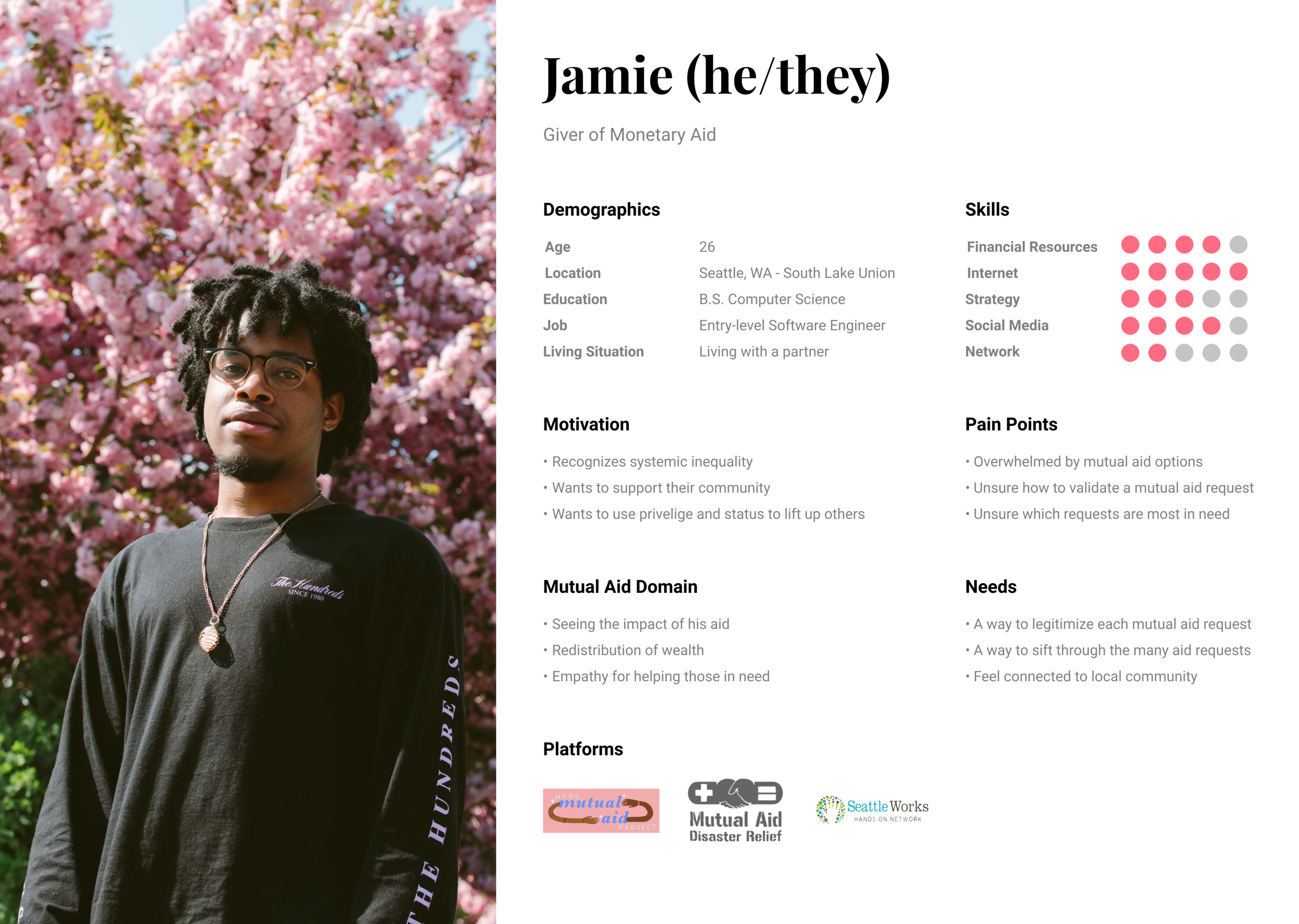
We developed personas in Miro and Figma, identifying 3 stakeholders: on the ground giver (someone who gives in person), funder (someone who gives money to the recipient), and the recipient (someone who requests mutual aid). All photos are from Unsplash. Shout out to Chris Sim for helping with designs.
Initial Designs
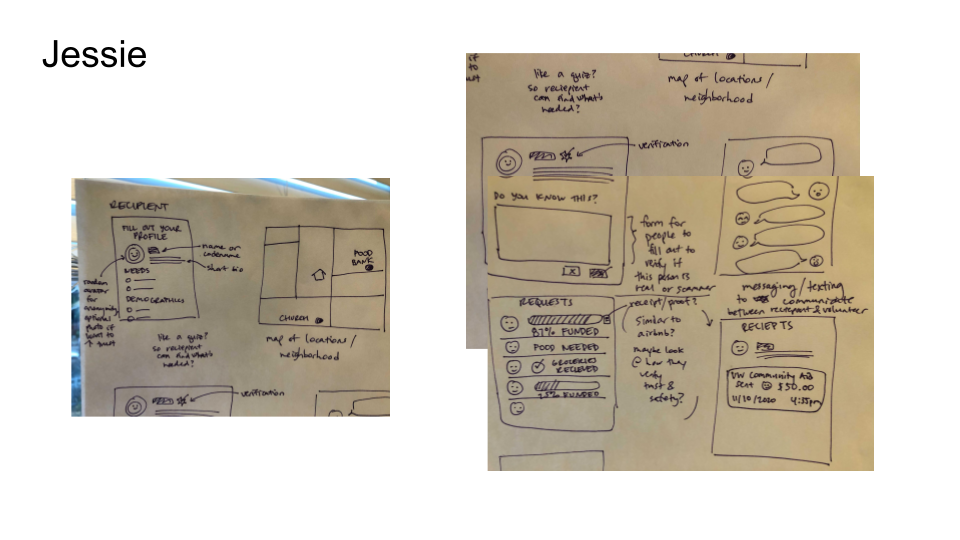
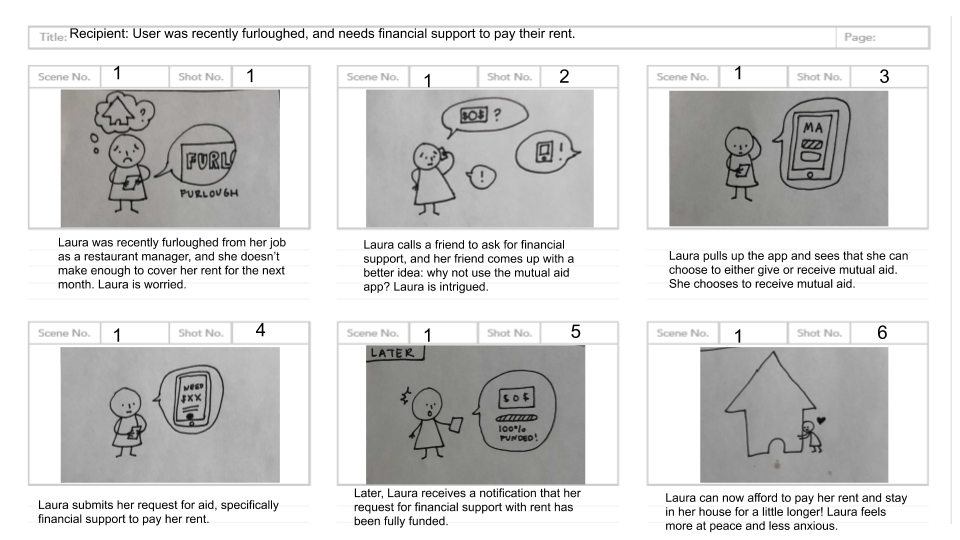
We sketched potential design solutions and scenarios that featured app discovery and user experience. I sketched a storyboard that explores the journey of a potential user who is recently furloughed and needs substantial financial support to pay their rent.
In the future, we’d love to focus more on accessibility and safety.